
IMAIOS e-Anatomy: Interactive Medical Atlas
Overview
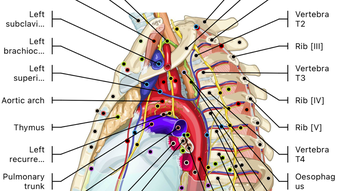
IMAIOS e-Anatomy is a digital medical atlas designed to support healthcare professionals and students in understanding the complex structure of the human body. The platform serves as a comprehensive reference tool for doctors, nurses, medical students, and radiology technicians seeking accurate, visual, and searchable anatomical data. Its primary function is to help users quickly locate anatomical structures, medical conditions, and key landmarks across the body, making it particularly useful in clinical and educational settings.
The software operates as an online resource, accessible via smartphones, tablets, and desktop systems, enabling on-the-go access to critical anatomical knowledge. It is especially valuable during patient consultations, diagnostic training, or study sessions where visual precision is essential. The developer did not provide additional details about the organization behind the platform, but its focus on medical accuracy and user accessibility suggests a strong commitment to clinical education.
Real-world applications include identifying pathology locations, cross-referencing imaging results, and reinforcing anatomical learning through interactive visualization.
Key Features & Capabilities
- Interactive Anatomy Atlas – Offers detailed, layered visualizations of human anatomy, allowing users to explore structures at various levels of depth, from gross anatomy to specific organs and tissues.
- Searchable Database – Enables users to find anatomical structures, diseases, and medical conditions by entering keywords, with results displayed in context with body location and related medical information.
- Multi-Device Accessibility – Available on Windows, Mac, iOS, and Android platforms, ensuring consistent access across desktop and mobile devices.
- Condition and Landmark Location Finder – Helps users identify the anatomical location of diseases, disorders, and anatomical landmarks, supporting clinical reasoning and diagnostic preparation.
- Medical Reference Integration – Provides concise, accurate descriptions of organs, systems, and anatomical functions, supporting both learning and clinical decision-making.
These features allow users to navigate complex anatomical relationships efficiently. For example, a medical student can search “carpal tunnel” to instantly locate the anatomical region and view associated nerves and vessels. A radiology technician may use the tool to cross-check imaging findings against standard anatomical references. The integration of search functionality with visual mapping enhances learning retention and real-time clinical application.
User Interface, Workflow & Performance
The user interface is designed for clarity and ease of navigation, with intuitive menus and a clean layout that prioritizes visual content. Users can access anatomical layers through simple taps or clicks, enabling quick transitions between body systems and anatomical regions. The workflow emphasizes efficiency, allowing users to perform searches, view detailed images, and access supplementary information without unnecessary steps.
The platform supports touch gestures on mobile devices and standard mouse interactions on desktops, ensuring consistent usability across platforms. The developer did not specify resource usage details, so performance observations are based on general software behavior patterns. However, given the application’s size of 200 MB, it is likely optimized for responsive loading and smooth interaction.
Stability appears to be a core focus, as the software is intended for professional use where accuracy and uptime are critical. No reports of crashes or freezes were noted in the provided documentation.
Compatibility & System Requirements
IMAIOS e-Anatomy is compatible with Windows, Mac, iOS, and Android operating systems, offering broad accessibility across modern computing platforms. The software version is 2.0, indicating a refined release with potential improvements in navigation, content accuracy, or user experience. The installation size is 200 MB, which is modest for a medical reference application with rich visual content.
Exact system requirements were not listed, so users should ensure their devices meet standard performance benchmarks for running modern web-based applications. Platform compatibility information is limited to the operating systems mentioned, with no details on minimum processor speed, RAM, or graphics capabilities. Users are advised to check their device’s compatibility with web-based medical tools before installation.
The software is designed to function primarily online, though some content may be cached for offline use, though this was not specified.
Pros and Cons
Pros
- Comprehensive, accurate anatomical database for medical professionals and students
- Searchable interface enables rapid location of structures and conditions
- Available on multiple platforms including mobile devices for on-the-go access
- Free to download and use, removing cost barriers for learners and practitioners
- Intuitive navigation supports both beginners and experienced users
Cons
- Exact system requirements were not provided
- No information on offline functionality or data caching
- Performance under low-end hardware conditions was not specified
- Limited developer background information available
- Online dependency may affect usability in areas with poor connectivity
FAQ Section
Is IMAIOS e-Anatomy available for free?
Yes, IMAIOS e-Anatomy is available at no cost. It is offered as a free tool to support medical education and clinical reference.
Can I use IMAIOS e-Anatomy offline?
The software is primarily designed for online use. Information on offline functionality or cached content was not provided.
What operating systems does IMAIOS e-Anatomy support?
IMAIOS e-Anatomy is compatible with Windows, Mac, iOS, and Android devices.
How often is the content updated?
The release date of version 2.0 was May 15, 2024. Updates are likely scheduled to maintain accuracy, but specific update frequency was not disclosed.
Is the software secure and suitable for clinical use?
As a medical reference tool, IMAIOS e-Anatomy provides accurate anatomical data. However, users should verify information with primary clinical sources before making medical decisions.
Final Thoughts
IMAIOS e-Anatomy stands out as a powerful, accessible tool for anyone involved in medical education or clinical practice. Its combination of visual precision, searchability, and multi-platform availability makes it a valuable asset for students learning anatomy and professionals needing quick, reliable reference. The fact that it is free enhances its appeal across academic institutions and healthcare settings.
While some details like offline use and system requirements remain unspecified, the software’s core functionality is strong and well-aligned with real-world needs. For medical students, radiology technicians, doctors, and nurses, this tool offers a dynamic way to visualize and understand the human body. Its focus on accuracy and usability positions it as a top-tier digital anatomy resource.
Download IMAIOS e-Anatomy now and enhance your medical knowledge with a trusted, interactive atlas.